Designing Change: How Transition Design Turns Heritage into Climate Action
Planting a tree or hosting a workshop can feel good—but on their own, they rarely shift the systems driving climate change or biodiversity loss. If we want cooler streets, resilient food systems, and places where young people want to stay, we need more than single projects. We need transitions.
That’s where transition design comes in—and in the Fruitful Synergy project, we used it to connect living fruit heritage with long-term climate resilience.
From Projects to Transitions
A transition is a deep shift in how a system works, how we grow food, use land, teach, or plan our towns. It unfolds over years, shaped by local experiments, mainstream institutions, and wider pressures like climate or the economy.
Transition design is about intentionally shaping those shifts. Instead of asking, “What can we do this year?”, it asks, “What kind of future do we want in 20–30 years, and what small steps can we take now to move in that direction?”
Key features of transition design:
It looks at systems, not isolated problems.
It mixes visioning, experimentation, and reflection.
It is participatory: different actors co-design and learn together.
It is iterative: you act, learn, adjust, and repeat.
You can picture it less like engineering a machine and more like tending a garden.
The Four-Phase Cycle: Scan, Select, Shape, Support
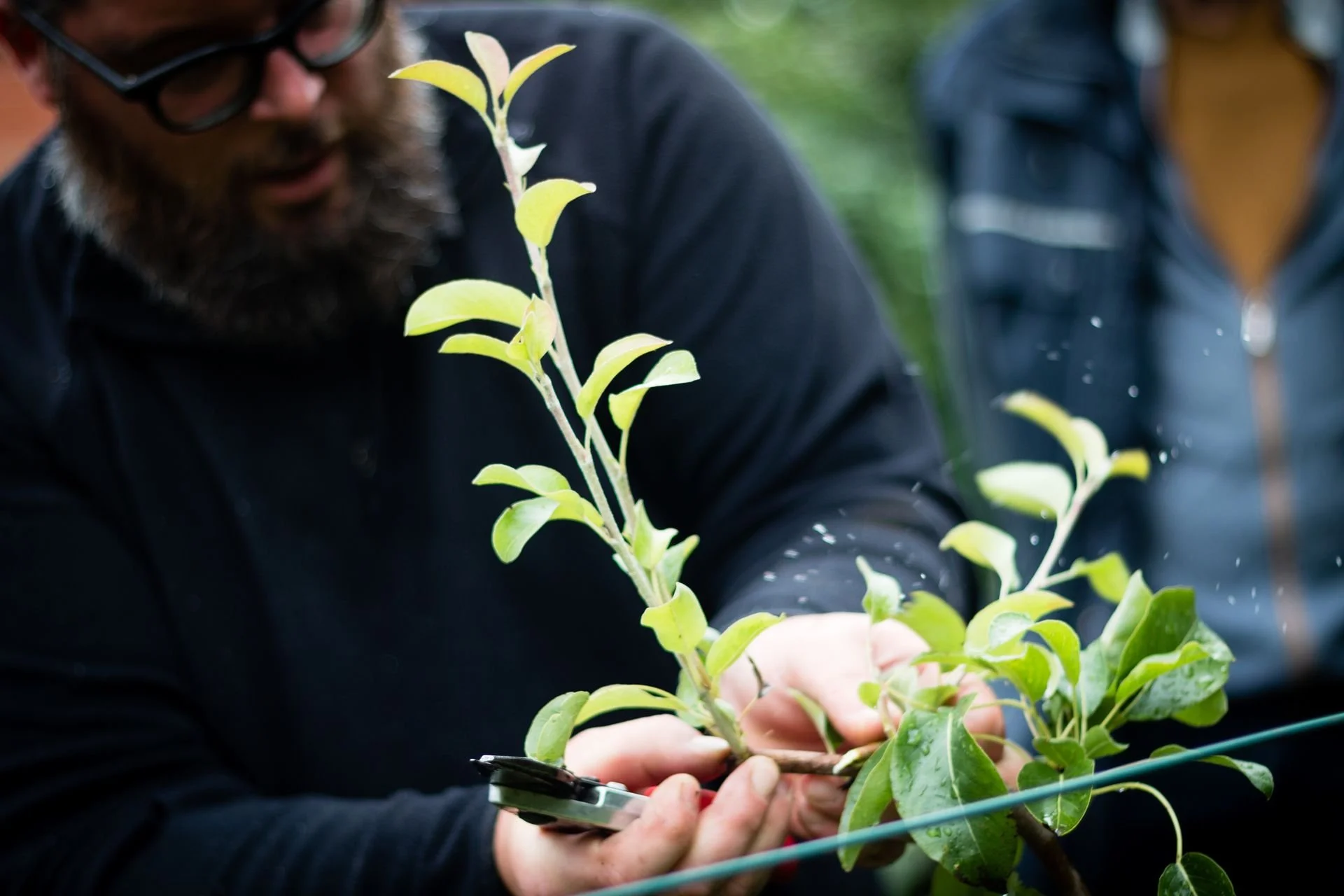
In From Tradition to Transition, this approach is translated into a clear four-step cycle: Scan, Select, Shape, Support.
Scan – Understand the ground
Map local environmental challenges: heat, drought, late frosts, soil loss, pollinator decline.
Map living heritage practices linked to land and food: grafting, pruning, traditional varieties, storage methods, community rituals.
Describe what each practice does for the ecosystem or community, not just what it looks like.
Select – Focus your efforts
Prioritise a small set of key challenges.
Prioritise heritage practices with strong potential and adaptability.
Treat heritage as a knowledge resource, not just a cultural ornament.
Shape – Turn insights into concrete projects
Cross challenges and practices in an “Opportunity Matrix”.
Ask: “How could this practice help address this challenge?”
Develop specific ideas: heritage orchards, green bus stops, apprenticeships, schoolyard experiments.
Choose the ideas with high impact and realistic effort.
Support – Make it ethical and durable
Check integrity, consent, and fair distribution of effort.
Clarify who owns recordings and materials.
Plan resources, partnerships, and timing.
Adjust or stop ideas that would harm the practice or the community.
Then the cycle repeats, informed by what you learn in practice.
Transition Design and Heritage
Transition design helps avoid two common traps:
romanticising heritage as something to be preserved exactly as it was, or
using it superficially to decorate “green” projects.
Instead, it:
keeps heritage alive and adaptable,
recognizes it as a knowledge system with ecological value,
centres heritage bearers as co-designers,
and connects small actions to long-term systemic change.
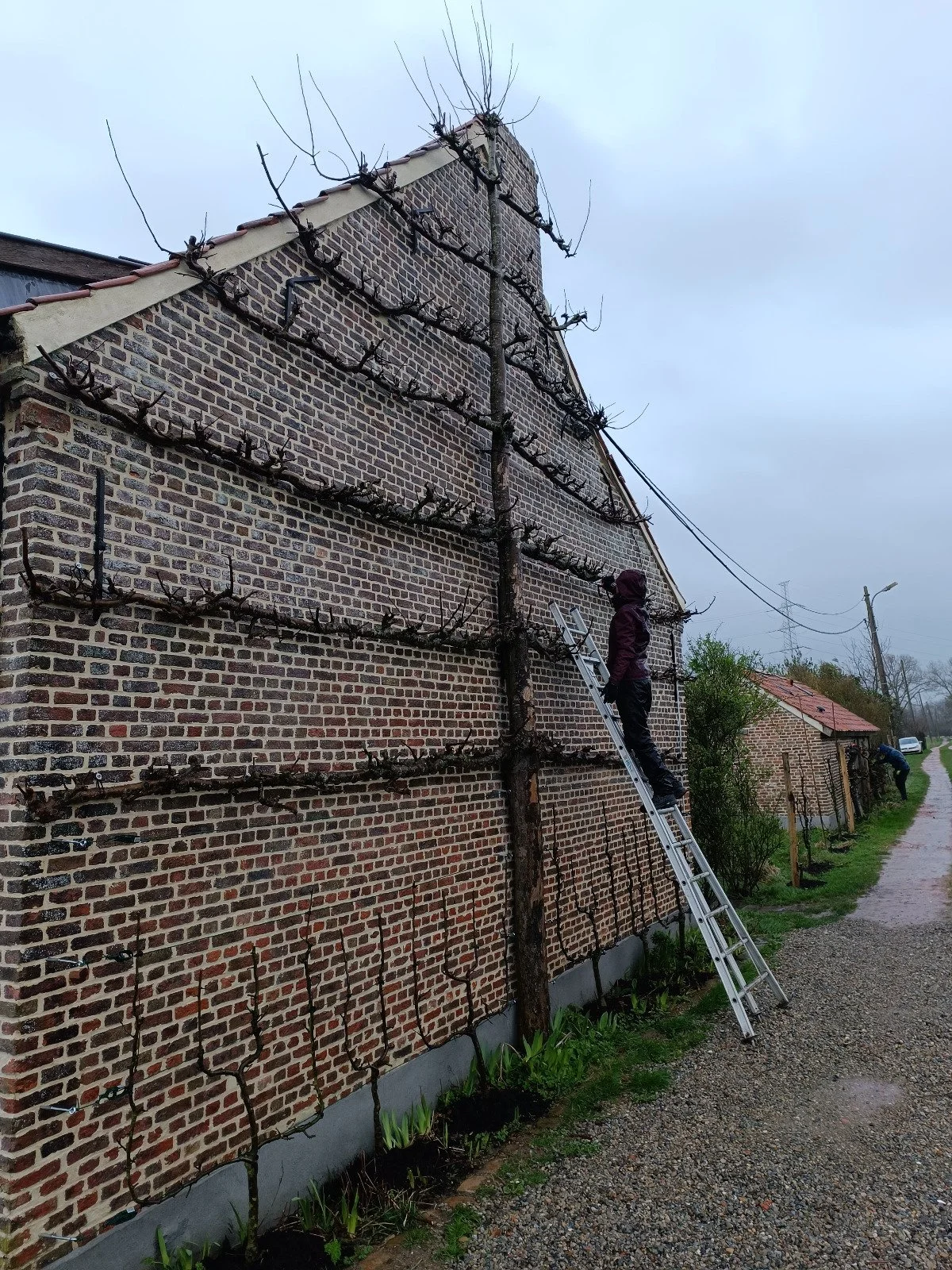
In Fruitful Synergy, this meant that espalier, grafting, pruning and other fruit practices can become starting points for rethinking how schools, communities, and landscapes respond to climate stress.
A Method Anyone Can Use
You don’t need to be a designer to work this way. If you’re a teacher, heritage worker, or local organiser, you can start with a simple question:
“What environmental challenges are we facing here, and which living practices might help us respond?”
From there, Scan, Select, Shape, and Support offer a practical path, from mapping what you have to building projects that grow resilience over time.
You can download the From Tradition to Transition handbook to explore the full methodology, along with ready-to-use templates, workshop activities, and step-by-step guidance for working with living heritage in your own context.
Dit project wordt getrokken door POMKO, CAG, PTI Kortrijk, PTS Mechelen en Coöperatie DOON. Dit project wordt gefinancierd door de Europese Unie.