
Maybe you already know someone who still grafts old apple trees, or a neighbour who swears by a particular pruning moon. You can feel that this knowledge matters in a changing climate, but how do you turn that intuition into a concrete project with students or your community?
The From Tradition to Transition playbook suggests a simple answer: move in four steps: Scan, Select, Shape, Support. Think of it as a loop you can repeat, not a rigid recipe.
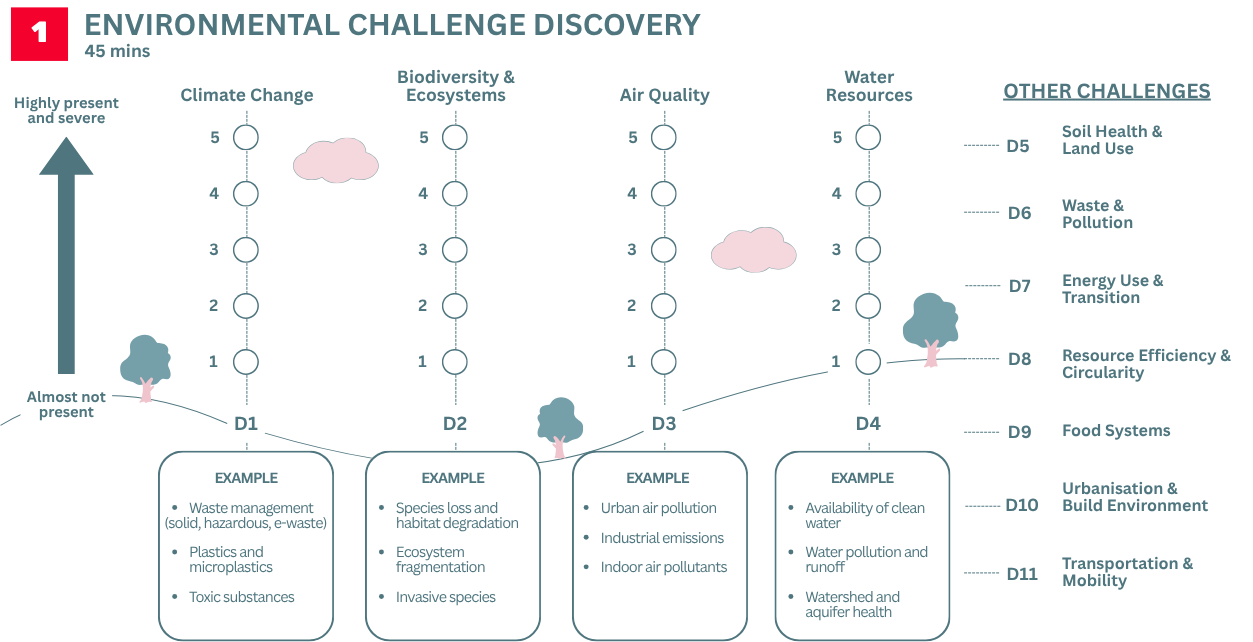
Step 1 – Scan: See the Full Picture
Before jumping to solutions (“Let’s plant trees!”), pause and scan two things side by side:
Environmental challenges
Ask a clear question, for example:
“Which environmental challenges most affect our orchards or landscape in the next 3–5 years?”Give everyone sticky notes and a few minutes to write challenges—one per note—with a short “because…” for context.
Cluster them on a wall: maybe “water stress”, “late frosts”, “pollinator decline”, “heat in schoolyard”, “soil erosion”.
You’re not solving anything yet, just building a shared map of what’s really happening.
Living heritage practices
Now switch to the heritage side:Ask: “Which practices do we know that relate to land, food, water, or community care?”
List them, one per note: grafting, espalier, pruning styles, traditional irrigation channels, storage methods, seasonal calendars…
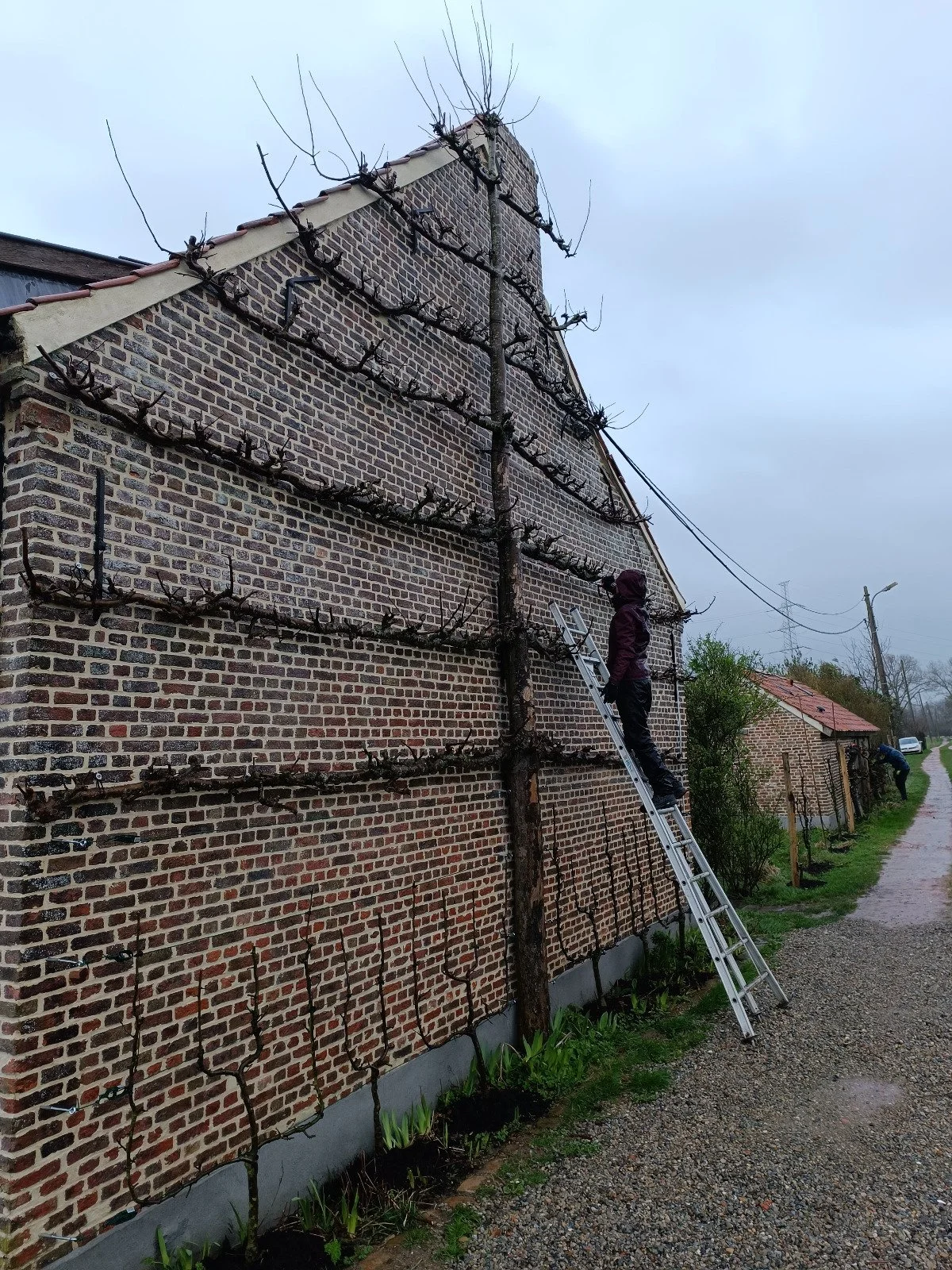
For each, capture what it does, not just what it is (e.g. “espalier = frost buffering + shade + using walls as microclimate”).
By the end of Scan, you have two walls: one of challenges, one of heritage “levers”. You’ve resisted the urge to rush into random projects—and that’s already a big step.
Step 2 – Select: Choose What to Focus On
You probably can’t tackle everything at once. Select helps you focus.
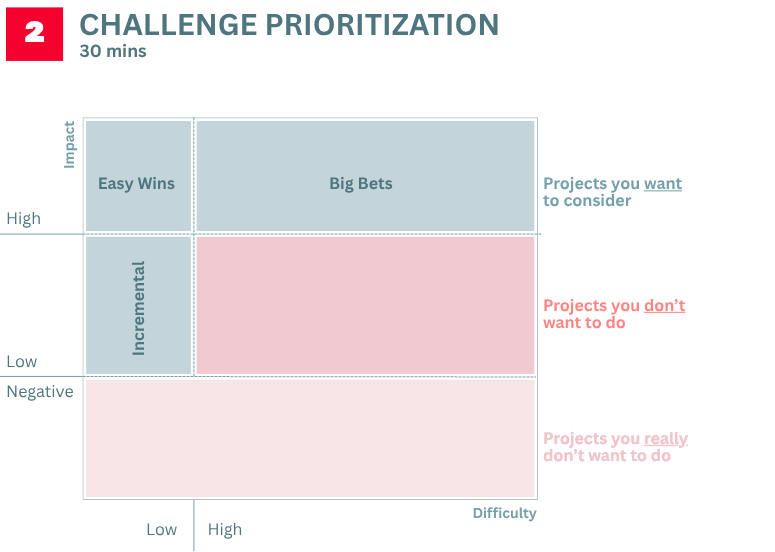
Prioritise environmental challenges
Look at your challenge wall and ask:
“Which of these, if we don’t act, will cause the most damage in the next few years?”Use simple voting (dots, hands) to pick a Top 3–5.
Prioritise heritage practices
Treat heritage as capability, not nostalgia. In the playbook, groups use an Impact × Adaptability matrix:Impact = how much ecological benefit or resilience this practice could bring.
Adaptability = how easily it can be used in different places or formats (schoolyard, farm, public space, etc.).
Place your practice notes roughly on that grid and pick a Top 5 that combine high impact and good adaptability.
Now you have a short list of real problems and promising practices—a strong base for creative work.
Step 3 – Shape: Turn Matches into Projects
Here comes the fun part: connecting dots.
Use a simple Opportunity Matrix:
Put your Top challenges on one side,
Your Top heritage practices on the other.
At each intersection, ask:
“How might this practice help reduce or adapt to this challenge?”
Write short ideas on stickies:
“Espalier + urban heat” → Green bus stops and school walls using espaliered fruit trees.
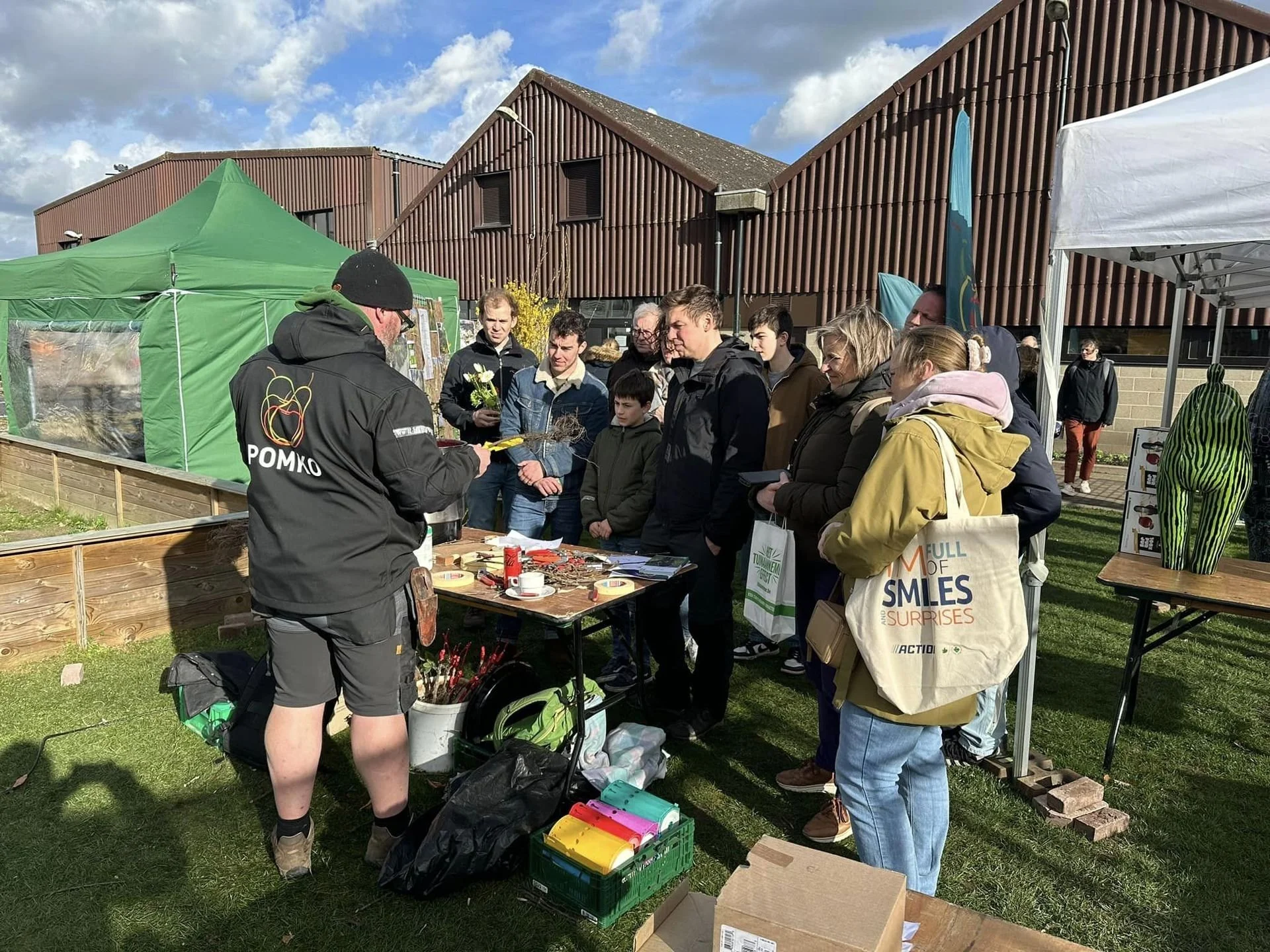
“Grafting + biodiversity loss” → Student-led grafting of local varieties in a community orchard.
“Traditional storage + food waste” → Workshop on low-energy fruit preservation for families.
You’ll end up with a grid full of possibilities. To avoid overwhelm, do one more quick prioritisation using an Impact × Effort matrix:
Impact = potential ecological / educational benefit.
Effort = time, money, partners needed.
Choose 2–3 ideas that sit in the “high impact, reasonable effort” zone. These become your concrete projects.
Step 4 – Support: Make It Ethical and Durable
Before launching into action, the playbook recommends a Support / Integrity & Consequence check for each chosen idea.
Bring together:
core team,
heritage bearers (elders, craftspeople),
anyone responsible for consent, data, or land access.
Walk through six simple questions (adapted from the Support Canvas):
Integrity: Does this project respect the practice and the people who carry it?
Consent: Who needs to say yes (formally or informally)? Is that documented?
Burden: Are we putting extra unpaid work on elders, teachers, or volunteers? How do we support them?
Risks: Could this harm the practice (e.g. over-commercialisation, misrepresentation) or the environment?
Data & ownership: Who owns photos, recordings, lesson materials? How will they be shared?
Support & timing: What resources, training, or policies are needed to make this realistic?
If the idea comes out mostly green, go ahead. If you see “amber” risks, add safeguards (e.g. stipends for elders, clear crediting, seasonal limits). If it’s “red” and can’t be fixed, redesign or stop. That’s still success—it protects the community.
Start Small, Learn Fast, Repeat
The playbook makes one thing very clear: this isn’t a one-off project plan; it’s a cycle. After your first round:
Celebrate what happened (new trees, new apprentices, new stories).
Document numbers and experiences.
Reflect with the community: what worked, what didn’t, what surprised you?
Then go back to Scan with new insights.
Each loop strengthens both the heritage practice and your local capacity to deal with environmental change.
You don’t need big budgets or perfect expertise to begin. You need a practice people care about, a few hours with sticky notes, and the willingness to listen—both to the climate, and to the knowledge already living in your community.
You can download the From Tradition to Transition handbook to explore the full methodology, along with ready-to-use templates, workshop activities, and step-by-step guidance for working with living heritage in your own context.
Dit project wordt getrokken door POMKO, CAG, PTI Kortrijk, PTS Mechelen en Coöperatie DOON. Dit project wordt gefinancierd door de Europese Unie.